
In the age of technology, marketing has undergone a revolutionary change whereby the approach to audiences has become more specific and personalized. The current marketing strategies do not use generic messages since consumers demand relevant and timely information that targets their individual requirements. The emergence of big data, analytics, and automation is behind this paradigm shift.
The consumer behavior of the current generation is characterized by interactions through various platforms including website visits, emails, and use of social media applications. These interactions provide essential data that help marketers to engage potential clients based on their interests and preferences.
Central to this revolution is hyper-personalization of marketing campaigns where businesses are able to create personalized experiences for customers using real-time data, predictive analytics, and artificial intelligence. Contrary to traditional personalization that depends on simple categorizations, hyper-personalization considers behavioral trends and contextual data.
What is Hyper-Personalization in Marketing?
So Hyper-Personalization is about sending the right message to the right person at the right time. It uses information from data to figure this out. Hyper-Personalization uses things like Artificial Intelligence and machine learning to look at what people do and guess what they might want next.
Hyper-Personalization does not think of people as groups. It thinks of each person as an individual. Looks at their own special journey. This makes everything feel more important and meaningful to the person.
Key Features
- Hyper-Personalization does real-time user behavior tracking
- It uses Artificial Intelligence to make decisions
- Hyper-Personalization does content personalization
- It gives us customer insights about what people might do next, with Hyper-Personalization
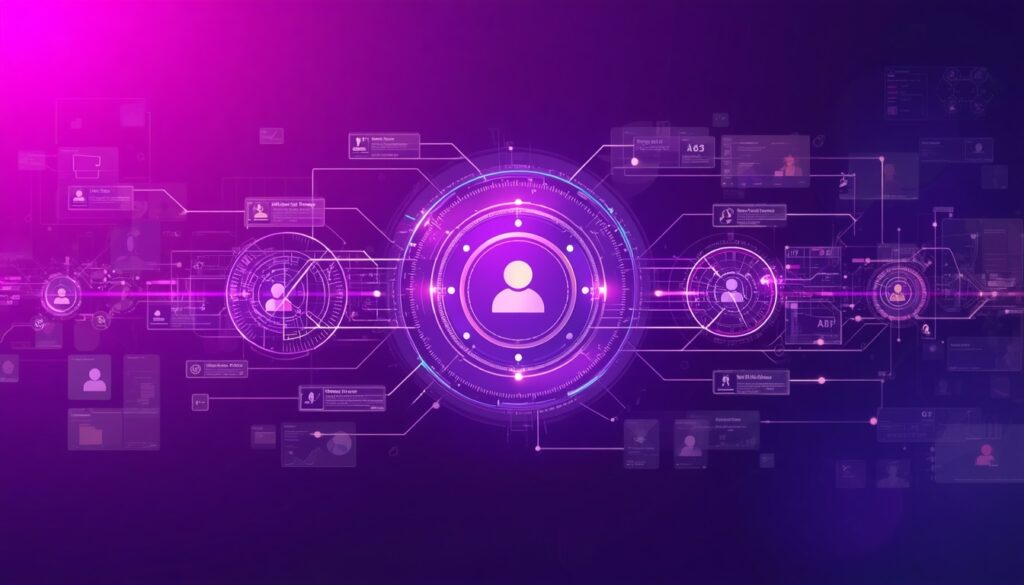
Types of Personalization
| Type | Description |
|---|---|
| Rule-based | Uses fixed rules for personalization |
| AI-driven | Learns from user behavior continuously |
| Predictive | Anticipates customer needs before actions |
Why Hyper-Personalization Matters Today
People are getting much information these days. They see a lot of ads every day. It is hard for any brand to get noticed. When brands send out messages that are not really meant for the person they usually get ignored.
When brands use hyper-personalization in marketing they can make things more interesting for each person. This helps people pay attention.
Key Features
- Higher engagement rates
- customer experience
- Stronger brand loyalty
- Better conversion performance
How Hyper-Personalization Actually Works
The process begins by gathering information from different sources such as browsing habits, buying patterns, and interaction on applications. The collected information is analyzed by artificial intelligence algorithms that recognize trends and preferences.
Step-by-Step Process
| Step | Description |
|---|---|
| Data Collection | Gather user activity from multiple platforms |
| Data Analysis | Identify patterns using AI tools |
| Prediction | Forecast user intent and behavior |
| Content Delivery | Show personalized messages in real time |
Key Features
- Multi-source data integration
- Behavioral analysis
- Predictive modeling
- Automated personalization
Technologies Behind Hyper-Personalization
To make personalization really work you need a few technologies to work together. Artificial Intelligence is what helps make the decisions and machine learning makes it better and better over time. Big data systems are great at handling a lot of information.
These technologies make sure that the messages you get are not about you but also come at the right time. Hyper-Personalization technologies are really important for this.
Key Features
- Artificial Intelligence gives us insights that are powered by AI
- Machine learning helps us adapt to what people like
- Big data processing is what we use to handle all the information
- Automation systems help us do things automatically which is really helpful, for Hyper-Personalization technologies and big data systems and machine learning and Artificial Intelligence.
Technology Breakdown
| Technology | Role |
|---|---|
| AI | Decision-making and automation |
| Machine Learning | Behavior prediction |
| Big Data | Data processing at scale |
Benefits of Hyper-Personalization
The best thing about Hyper-Personalization is that it really gets people involved. When people see things that’re just right for them they are more likely to pay attention to it. Hyper-Personalization is about showing people what they want to see.
Hyper-Personalization also helps companies make sales and not waste money on people who are not interested. This is because Hyper-Personalization targets the people who really matter.
Key Features
- Better engagement with Hyper-Personalization
- Higher return on investment, with Hyper-Personalization
- Hyper-Personalization helps with targeting accuracy
- Increased customer satisfaction because of Hyper-Personalization
Traditional vs Modern Marketing Approach
To understand the impact better, let’s compare traditional marketing with modern personalized strategies.
| Aspect | Traditional Marketing | Hyper-Personalized Marketing |
|---|---|---|
| Targeting | Broad audience | Individual-focused |
| Data Usage | Limited | Real-time and extensive |
| Content | Generic | Highly relevant |
| Engagement | Lower | Much higher |
AI in Marketing Automation: Smarter Campaign Execution
AI is transforming how marketing campaigns are planned and executed. It helps automate repetitive tasks and improves targeting accuracy.
Key Features
- Automated workflows
- Smart targeting
- Campaign optimization
Customer Data Platforms: Unifying Marketing Insights
Customer Data Platforms help businesses bring all customer information into one place for better decision-making.
Key Features
- Unified customer profiles
- Real-time updates
- Better segmentation
Predictive Analytics in Marketing: Understanding Customer Behavior
Predictive analytics helps marketers understand what customers are likely to do next based on historical data.
Key Features
- Behavior prediction
- Data forecasting
- Smarter campaigns
Omnichannel Marketing: Creating Seamless Experiences
Omnichannel strategies ensure customers get a consistent experience across all platforms.
Key Features
- Multi-channel integration
- Consistent messaging
- Improved engagement
First-Party Data Strategy: The Future of Marketing Growth
First-party data is becoming extremely important as third-party cookies phase out.
Key Features
- Direct customer data
- Better accuracy
- Privacy-friendly approach
Challenges In Implementation
Hyper-personalization is really powerful. It does come with some challenges. One big issue is dealing with amounts of data, which needs a strong system to handle it. People also worry about their data being private because they expect it to be kept safe.
If the data is wrong or the implementation is bad it can lead to recommendations that’re not relevant and that can make the customer experience bad.
Key Features
- Data privacy concerns
- technical complexity
- Infrastructure requirements
- Accuracy dependency
Future of Personalized Marketing
Marketing is changing to use computers and artificial intelligence. In the future companies will know what customers want before they tell them.
This will make it easy for customers to interact with companies on all platforms. Marketing will get better. Feel more like its done by a person.
Key Features
- Predictive engagement
- automated campaigns
- Real-time decision systems
- Smarter customer journeys, for Marketing
Marketing will use these features to know customers. Personalized Marketing will become more human-like.
The Future of Personalized Marketing is here.
Conclusion
Marketing has changed a lot because of something called hyper-personalization. Now we do not just try to sell things to a group of people. We try to make each customer feel like we are talking to them. We use information that we get in time and we use computers to help us understand what our customers like.
When we understand the preferences of our consumers, we can give them the goods that they would love. It pleases them, and as a result, they will listen to whatever we are saying. Consumers need to be assured that we consider their preferences and interests while selling goods. If we do, then it means that we will succeed in winning them over and making them more inclined towards buying more products from us. The world of marketing today is extremely tough.
Frequently Asked Questions:
1. What does hyper-personalization mean when we talk about marketing?
When we talk about marketing, hyper-personalization means that we use the customer data we have along with intelligence and analytics to give each customer a really personalized experience.
2. What is the difference between hyper-personalization and the personalization we are used to?
The personalization we are used to uses basic information about the customer but hyper-personalization looks at how the customer behaves and interacts with us.
3. Why is hyper-personalization so important for marketing today?
Hyper-personalization helps us get customers more involved turn more of them into buyers give them an experience and make them loyal to our brand.
4. What tools do we need to make -personalization work?
To do hyper-personalization we often use intelligence, machine learning, big data analytics, customer data platforms and tools that automate our marketing.
5. Can small businesses use hyper-personalization too?
Yes small businesses can also use hyper-personalization by using tools that help them personalize things for their customers and by using the customer data they have.
6. What are the good things, about using hyper-personalization?
Using hyper-personalization has benefits, including getting customers more engaged keeping them as customers for longer turning more of them into buyers and making our marketing efforts more effective. Hyper-personalization really helps us make our marketing better.