

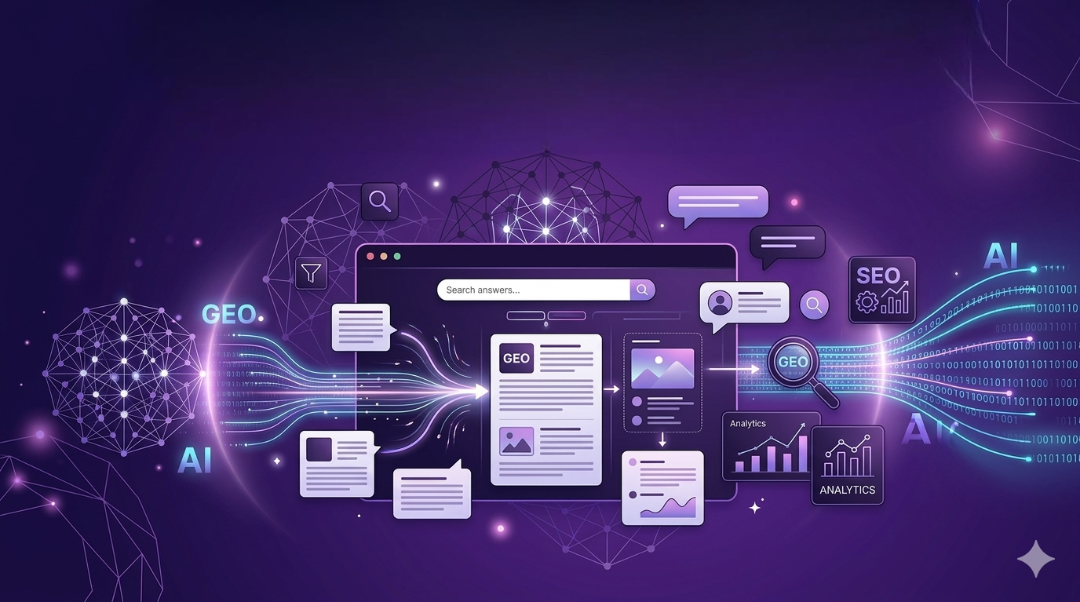
Generative engine optimization is one of the hottest topics in the digital marketing world right now, and many experts see it as the next big thing in SEO. With advancements in AI changing the way we discover, find, and engage with information online, it has become apparent that conventional optimization techniques will not suffice anymore. Traditional search engines are turning into answer engines thanks to AI-driven algorithms generating replies rather than displaying links.
As a result, business owners and marketers need to re-strategize on how to optimize their content for these changes. This does not only imply ranking on SERPs but also selection, citation, and synthesis through AI tools.
In this article, we discuss the meaning of generative engine optimization, how it differs from other SEO techniques, and why it represents the future of optimization.
What is Generative Engine Optimization (GEO)?
Optimization for Generative Engines involves the optimization of content for AI-driven search engines that produce answers rather than just returning links. As opposed to conventional SEO strategies that rely on ranking sites based on their position within a search engine results page, optimization for generative engines makes sure that content appears, is summarized, and used by AI-based systems.
Main Characteristics of Optimization for Generative Engines:
- Uses AI-produced answers
- Favors context over keywords
- Is geared toward conversational searches
- Ensures the clarity of the content
- Considers the purpose behind searches
Why Generative Engine Optimization Matters

As such developments in AI-driven search continue to evolve, generative engine optimization is becoming increasingly important. Modern searchers have become used to getting accurate results instantly and do not want to spend extra time scrolling through different pages to get to the answer they need. Zero-click searches powered by AI-driven summaries are now becoming more common.
Disregarding generative engine optimization may affect your business negatively despite high search visibility and ranking performance. In order to be relevant in the coming years, SEO will require content that will appeal to modern-day Internet users and be compatible with generative engines.
Benefits:
- Increases the chances of appearing in zero-click searches
- Enhances the chances of featuring in AI summaries
- Provides a better user experience due to direct answers
How Generative Engine Optimization Differs from Traditional SEO
Understanding the difference between traditional SEO and generative engine optimization is crucial for adapting your strategy.
| Aspect | Traditional SEO | Generative Engine Optimization |
|---|---|---|
| Focus | Keywords & backlinks | Context & intent |
| Output | Search rankings | AI-generated answers |
| Content Style | Keyword-rich | Conversational & structured |
| User Interaction | Click-based | Answer-based |
| Optimization | SERPs | AI engines |
Difference Between Traditional SEO and GEO
The shift from traditional SEO to what can be termed generative engine optimization is an important step in the world of digital marketing. SEO in its classical form relies on the promotion of websites through the use of keywords and links, while GEO seeks to provide actual and practical answers using artificial intelligence algorithms. With the future, it becomes increasingly less about securing high ranks and more about relevance and usability.
Content that works for GEO requires careful structuring, which allows AI algorithms to interpret the text accurately. It should not only provide clear information but also have proper logic and adequate contextual data. With evolving search engines, it is vital to consider the content’s compatibility with artificial intelligence-based ranking and response algorithms.
Key Points:
- Traditional SEO focuses on rankings; GEO focuses on answers
- GEO emphasizes context over keywords
- AI readability becomes more important than keyword density
Core Principles of Generative Engine Optimization
For successful generation engine optimization, it is advisable to adhere to rules that correspond to the way AI functions. Produce texts that are understandable, coherent, and reader-focused. SEO optimization in the future depends on how valuable your information is to users and how it responds to their queries.
Trustworthiness and reliability play a crucial role in generative engine optimization. AI prefers information that is reliable and well-organized. To achieve this, use appropriate titles, provide clear descriptions, and give pertinent examples to enhance understanding.
- Focus on clarity and structure
- Prioritize user intent and value
- Build authority through accurate content
How AI is Shaping the Future of SEO
AI technology plays a crucial role in generative engine optimization. It assists the engines in understanding language, context, and intent of users in a better way. Generative engine optimization’s future will be determined by natural language processing and machine learning technologies in order to give more accurate and personalized results.
This kind of optimization helps match the content with AI perception of language. With advancements in AI technology in the future, SEO will continue to become dynamic.
- AI improves search accuracy and relevance
- Enables conversational and voice-based queries
- Drives personalized search experiences
Role of Keywords in GEO
Keywords are important in optimizing generative engines, but their importance has evolved. Instead of trying to get your hands on exact-match keywords, it is more important to concentrate on the semantic aspect and keywords that are based on intent.
Overloading content with keywords negatively impacts its readability, as well as reducing the effectiveness of your message. It is important to maintain a balance in optimizing search engine algorithms to ensure optimal results.
Important points:
- Focus on keywords based on intent and long tail
- Avoid keyword stuffing
- Incorporate keywords naturally in content
Technical SEO in the GEO Era
Even today, technical SEO forms the basis for the optimization of the generative engine, allowing content to be easily accessible and properly structured. In the future, SEO will focus on combining technical efficiency with high-quality content for increased visibility in AI-driven search engines.
The technical aspects of SEO include quick page load times, mobile-friendly layout, and proper data structuring. The optimization of the generative engine relies heavily on technical factors for content improvement.
Key Points:
- Ensure fast and mobile-friendly websites
- Use structured data for better understanding
- Maintain clean and secure site architecture
Challenges of Generative Engine Optimization
There are many advantages when it comes to using generative SEO, but there are also challenges that come with it. For one, artificial intelligence may behave unexpectedly, and understanding how to quantify success in such cases can still be a difficult task. Future of SEO includes getting used to such uncertainties.
Furthermore, zero-click searches are resulting in less traffic for websites. With generative SEO, there is an increased importance of gaining visibility and establishing one’s brand rather than focusing on clicks.
Main points:
- Complex performance measurement
- Unexpected behavior of artificial intelligence
- Reduced site traffic from zero-click searches
Benefits of Generative Engine Optimization
Despite the challenges, generative engine optimization has its perks too. It improves your chances of getting listed in AI-driven responses and helps retain audience engagement. In the future, SEO is going to reward those who consistently publish quality and user-oriented content.
The optimization technique also establishes brand authority, positioning your brand as a credible provider of information, thus creating a foundation for future success.
Key Benefits:
- Increases visibility in AI responses
- Establishes brand authority
- Improves content relevancy
Future Trends in GEO
However, as technology continues to develop, there is an emergence in the optimization of generative engines. The future of SEO will be more personalized and interactive.
The development of new technologies will serve to further promote the optimization of generative engines and ensure that they remain essential components of digital marketing strategies.
Important points:
- Emergence of voice and conversational search
- Personalized search results
- Seamless integration of advanced technologies
Conclusion
SEO via Generative Engine Optimization is paving the way for a future version of SEO that one wouldn’t have thought possible just a short while back. In light of the changing dynamics of how search engines now operate due to the introduction of artificial intelligence, companies must focus on ways to remain relevant and be seen.
The future of SEO depends on offering value, understanding what users want, and creating content that can easily be interpreted by an AI search engine. By utilizing SEO through generative engine optimization, firms position themselves for sustained success in the digital age.