

In now a day’s virtual landscape, companies generate massive amounts of consumer statistics from websites, apps, social media and CRM systems. A properly described Customer Data Analytics Strategy allows corporations remodel this uncooked records into meaningful insights that improve client revel in, advertising and marketing performance and commercial enterprise results.
By leveraging facts analytics, companies can apprehend customer behavior are expecting future needs and supply personalized studies. This blog explores the importance, additives, equipment, blessings, challenges and great practices of building an powerful Customer Data Analytics Strategy.
What is Customer Data Analytics Strategy
A Customer Data Analytics Strategy is a structured approach to accumulating, managing, reading, and using patron facts to enhance selection making and commercial enterprise performance. It makes a speciality of turning facts into actionable insights that support marketing, income, product improvement and customer service.
This strategy integrates facts from multiple assets, applies analytics strategies and ensures information governance for dependable insights.
- Structured Data Approach – A Customer Data Analytics Strategy is a deliberate technique for accumulating, managing, and studying purchaser statistics from more than one touchpoints.
- Unified Customer View – It integrates facts from CRM, websites, apps, and advertising and marketing platforms to create a single, comprehensive consumer profile.
- Insight Generation – The method makes use of analytics and AI to pick out customer behavior styles, possibilities, and developments for higher selection-making.
- Personalization Enablement – It allows businesses deliver targeted marketing, personalized reviews, and applicable product guidelines.
- Data-Driven Growth – By reworking uncooked data into actionable insights, the approach helps improved engagement, retention, and average business performance.
Importance of Customer Data Analytics Strategy
Businesses want a Customer Data Analytics Strategy to:
- Understand client conduct and possibilities
- Improve personalization and targeting
- Enhance client retention and loyalty
- Optimization advertising and marketing campaign
- Enable record pushed selection making
A sturdy method helps agencies create significant client trips and advantage competitive benefit. A Customer Data Analytics Strategy is important for companies aiming to understand their clients and make knowledgeable decisions. It permits organizations to accumulate and analyze customer conduct, preferences, and interactions throughout more than one channels, helping create a complete purchaser view. This deeper information allows groups to supply personalized reports, improve engagement and build more potent relationships.
Additionally, the approach supports greater effective advertising by way of identifying excessive value segments, optimizing campaigns, and growing return on investment. It also enhances purchaser retention by means of predicting needs and addressing pain points proactively. Overall, a well defined Customer Data Analytics Strategy helps groups pressure innovation, enhance consumer pride and obtain sustainable increase via records driven insights.
Key Components of Customer Data Analytics Strategy
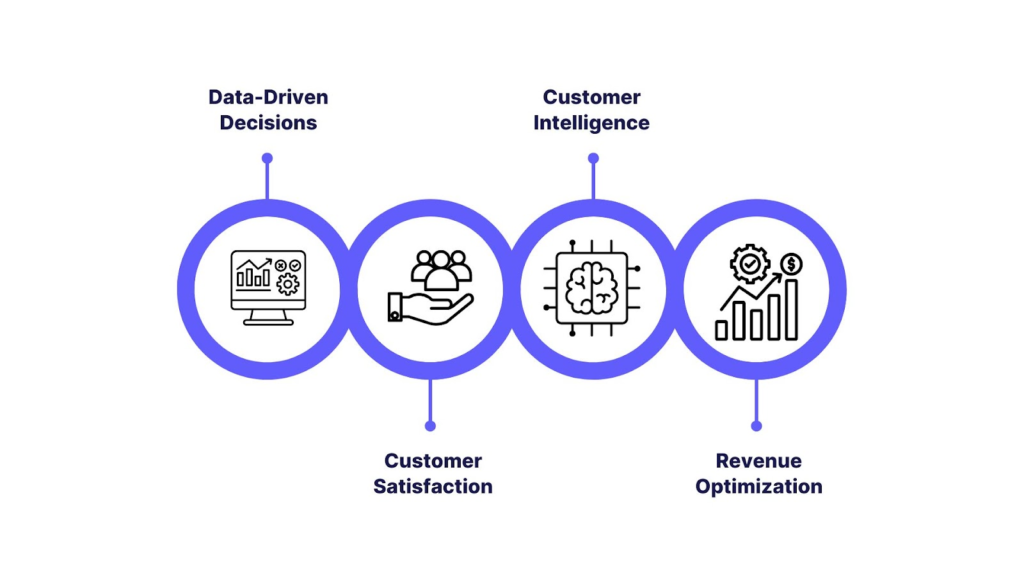
The Customer Data Analytics Strategy consists of numerous crucial additives that make certain effective facts utilization. It starts off evolved with information series from more than one touchpoints including websites, CRM structures and social platforms, accompanied through statistics integration to create unified client profiles.
Components Overview Table:
| Component | Description | Purpose | Example |
|---|---|---|---|
| Data Collection | Gathering data from multiple touchpoints | Build unified customer view | Website tracking |
| Data Integration | Combining data from systems | Remove silos | CRM + marketing tools |
| Data Processing | Cleaning and transforming data | Improve accuracy | ETL pipelines |
| Analytics | Applying statistical models | Generate insights | Segmentation |
| Activation | Using insights for action | Improve engagement | Personalization |
Data processing and analytics then remodel uncooked facts into actionable insights, assisting perceive conduct patterns and trends. Finally, facts activation allows agencies to use these insights for personalization, targeted marketing and advanced client experiences.
Tools Used in Customer Data Analytics
Modern analytics tools help automate and enhance data insights. The Customer Data Analytics Strategy is predicated on numerous tools to gather, procedure and examine customer facts efficiently. CRM structures help save and manipulate client profiles, while Customer Data Platforms unify information from a couple of channels for a single purchaser view. Business intelligence and analytic tools provide dashboard and visualization for higher selection making.
Tools Comparison Table:
| Tool Type | Function | Benefit | Use Case |
|---|---|---|---|
| CRM Platforms | Store customer data | Unified profiles | Sales tracking |
| CDP | Centralize customer data | Personalization | Omnichannel marketing |
| BI Tools | Visualize insights | Better decisions | Dashboards |
| Analytics Platforms | Track behavior | Performance insights | Campaign analysis |
| AI Tools | Predict trends | Automation | Customer prediction |
Additionally, AI-powered analytic tools permit predictive insights, automation and advanced customer segmentation to beautify personalization and advertising performance.
Benefits of Customer Data Analytics Strategy
A properly carried out Customer Data Analytics Strategy supplies a couple of blessings:
- Better consumer segmentation
- Increased advertising ROI
- Improved customer experience
- Enhanced product development insights
- Faster decision-making
- Stronger client relationships
Businesses that leverage analytics efficaciously can personalize interactions and expect client wishes. A properly defined Customer Data Analytics Strategy offers numerous blessings that assist groups improve performance and customer relationships. It permits deeper expertise of client conduct and options, allowing companies to supply customized reports and targeted marketing campaigns. This ends in higher engagement, improved conversion rates, and more potent consumer loyalty.
Additionally, the approach helps optimize marketing spend by using identifying excessive price segments and measuring campaign effectiveness. It additionally supports higher product development thru customer insights and speeds up records pushed choice making across groups. Overall, a Customer Data Analytics Strategy empowers organizations to beautify consumer pleasure, increase sales and preserve a aggressive gain.
Emerging Trends in Customer Data Analytic
AI Driven Personalization
AI helps expect behavior and automate personalization.
Real-Time Analytics
Businesses reply right away to client actions.
Privacy-First Analytics
Focus on consent, compliance and moral facts use.
Omnichannel Data Integration
Unified view across channels improves experience.
Emerging tendencies in Customer Data Analytics Strategy are transforming how businesses recognize and engage with their audiences. One principal fashion is the adoption of AI and system getting to know, which permits predictive insights, computerized segmentation and hyper personalization. Real time analytics is also gaining momentum, permitting corporations to respond instantly to patron interactions and enhance revel in across touchpoints. Additionally, privateness first analytics is becoming important as companies awareness on consent primarily based statistics series and regulatory compliance. Another essential trend is omnichannel information integration, in which businesses combine information from more than one structures to create a unified consumer view and supply constant, personalized studies.
Industry Applications
The Customer Data Analytics Strategy is extensively carried out throughout industries to beautify client understanding and business performance. In retail and e-trade, it helps supply personalized hints and optimize pricing techniques. The banking and finance quarter uses purchaser analytics for fraud detection, hazard assessment and tailored economic services.
Customer Data Analytics Strategy is widely used across industries:
- Retail: Personalized pointers
- Finance: Fraud detection and chance analysis
- Healthcare: Patient engagement insights
- Ecommerce: Conversion optimization
- Marketing: Campaign performance analysis
| Industry | Use Case | Data Type | Key Benefit | Example Outcome |
|---|---|---|---|---|
| Retail & Ecommerce | Personalized recommendations | Purchase & browsing data | Higher conversions | Product suggestions |
| Banking & Finance | Fraud detection | Transaction data | Risk reduction | Secure transactions |
| Healthcare | Patient engagement | Medical & behavioral data | Better care delivery | Improved outcomes |
| Telecommunications | Churn prediction | Usage & support data | Customer retention | Reduced churn |
| Travel & Hospitality | Customer personalization | Booking & preference data | Enhanced experience | Tailored offers |
| Media & Entertainment | Content recommendation | Viewing & interaction data | Higher engagement | Improved user retention |
Healthcare businesses leverage analytics to improve affected person engagement and remedy planning, whilst telecommunications organizations use it to reduce churn and beautify customer service. Additionally, advertising and media industries depend on patron statistics analytics to degree marketing campaign effectiveness, section audiences and improve typical client revel in.
Challenges in Customer Data Analytic
Overcoming those challenges calls for governance, automation, and professional groups. Implementing a Customer Data Analytics Strategy comes with numerous demanding situations that businesses must cope with for effective effects. One major undertaking is data privateness and compliance, as corporations must comply with rules and make sure secure handling of purchaser information. Another trouble is information integration complexity, in which combining records from a couple of structures and legacy structures can create silos and inconsistencies.
Despite advantages, corporations face demanding situations:
- Data privateness rules
- Integration complexity
- Data excellent troubles
- Skill gaps in analytics
- High infrastructure fees
Organizations additionally conflict with data great troubles, along with incomplete or misguided statistics that affects insights and selection making. Additionally, a shortage of professional analytics professionals can slow implementation and innovation. High infrastructure and technology prices similarly add to the problem, making it important for corporations to adopt scalable and value efficient analytics answers.
Best Practices for Customer Data Analytics Strategy
To build an powerful Customer Data Analytics Strategy, groups should comply with numerous tested high quality practices. First, outline clear enterprise desires so analytics efforts align with advertising, income and patron experience targets. Creating unified consumer profiles through integrating information from a couple of resources is likewise important for gaining correct and entire insights.
Define Clear Goals
Align analytic with business goal.
Build Unified Customer Profiles
Break statistic silos for an entire view.
Prioritize Data Quality
Accurate data guarantees dependable insight.
Use AI and Automation
Enhance scalability and efficiency.
Focus on Privacy and Compliance
Maintain accept as true with and regulatory adherence.
Organization have to prioritize data pleasant and governance to make sure reliable analytics and compliance with privacy regulations. Leveraging AI and automation can enhance efficiency, allow predictive insights and aid actual time decision-making. Finally, fostering collaboration among statistics, marketing and enterprise groups allows maximize the cost of customer insights and ensures analytics techniques power meaningful business outcomes.
Example Customer Analytics Workflow
An powerful Customer Data Analytics Strategy follows a dependent workflow that transforms raw patron information into actionable insights. The system starts off evolved with facts collection, in which purchaser statistics is gathered from websites, cellular apps, CRM structures and advertising and marketing systems. Next, statistics integration combines this statistics into unified purchaser profiles, casting off silos and enhancing visibility.
| Step | Activity | Outcome |
|---|---|---|
| 1 | Data Collection | Gather customer touchpoints |
| 2 | Integration | Create unified profiles |
| 3 | Analysis | Identify patterns |
| 4 | Insight Generation | Understand behavior |
| 5 | Activation | Personalize experience |
The third step is records evaluation, wherein analytics tools identify patterns, options, and conduct tendencies. After that, businesses pass to insight era, translating evaluation into significant guidelines for advertising and marketing and consumer revel in. Finally, activation applies those insights thru personalized campaigns, focused messaging and optimized client journeys, riding engagement and enterprise boom.
Future of Customer Data Analytics Strategy
The destiny of Customer Data Analytics Strategy lies in automation, AI and predictive analytics. Businesses will increasingly more rely upon real time insights, privacy first records control, and advanced personalization to enhance patron engagement.
Emerging technologies which include machine mastering and patron facts structures will in addition simplify analytics and free up new boom possibilities.
- AI-Driven Insights – Artificial intelligence will automate records analysis, permitting predictive modeling, smarter segmentation and hyper personalized purchaser experiences.
- Real-Time Decision Making – Businesses will an increasing number of rely on real-time analytics to respond instantly to customer behavior and enhance engagement across touchpoints.
- Privacy-First Data Strategies – With evolving policies, organizations will focus on consent-based totally facts series, transparency, and stable facts control practices.
- Omnichannel Data Integration – Future strategies will unify client records from on-line and offline channels to create seamless and steady customer trips.
- Automation and DataOps Growth – Automation and collaborative DataOps practices will streamline records workflows, improve information great and accelerate analytics transport for higher business effects.
Conclusion
A nicely deliberate Customer Data Analytics Strategy is vital for cutting edge agencies aiming to supply customized studies and information driven growth. By integrating more than one records resources, leveraging superior analytics tools and focusing on customer insights, companies can improve advertising and marketing effectiveness and client delight.
Companies that invest in sturdy analytics techniques could be higher placed to adapt to converting consumer expectations and stay aggressive within the virtual economy.