Accelerate your IT automation with AI
Accelerate your IT automation with AI Accelerate your IT automation with AI Discover how Red Hat Ansible Lightspeed uses generative AI to help…


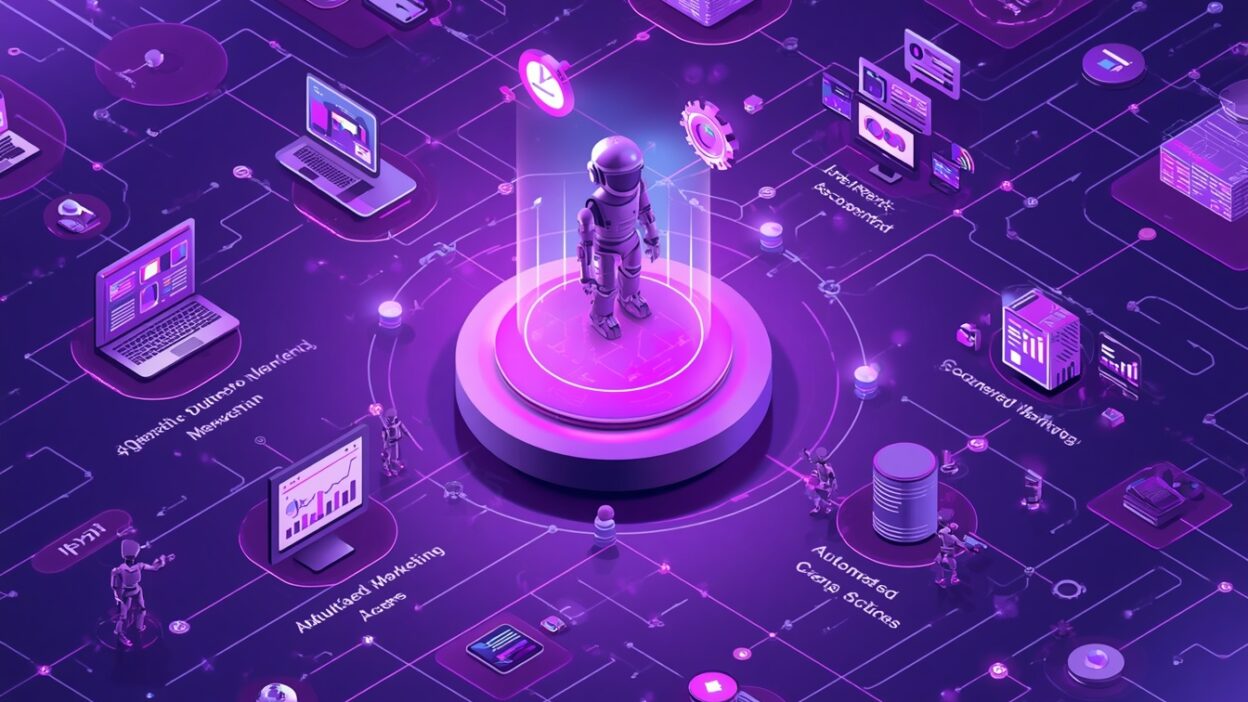
Marketers With AI Agents are changing the way businesses attract, engage, and retain customers. Marketing has always been about understanding people, but today, customer expectations are moving faster than traditional marketing teams can handle.
Customers expect relevant recommendations, quick answers, personalized emails, and consistent experiences across websites, social media, email, and other channels. Managing all of this manually can quickly become difficult.
This is where AI agents are becoming valuable.
Unlike basic automation tools that simply follow predefined rules, AI agents can analyze information, make decisions, complete tasks, and respond to changing situations with less human intervention. IBM describes AI agents as systems that can support areas such as customer engagement, campaign management, content creation, and performance analysis.
For marketers, this means moving beyond simply automating repetitive tasks. The bigger opportunity is creating marketing systems that continuously learn from customer behavior and help teams deliver more useful experiences.

AI agents are software systems designed to understand goals, analyze information, make decisions, and take actions.
A traditional automation workflow might send an email when someone fills out a form. An AI agent can take a broader approach. It may analyze the person’s activity, understand their interests, check CRM information, determine the most appropriate follow-up, and recommend or execute the next action.
This difference is important.
Traditional automation mostly follows “if this happens, do that.” AI agents can work toward a goal while considering context and available information.
For example, imagine a visitor repeatedly reading articles about a specific product. An AI marketing agent could recognize this behavior, update the customer’s profile, assess buying intent, recommend relevant content, and notify a sales representative when the lead becomes highly engaged.
The human marketer still controls the strategy. The agent helps execute it faster and at greater scale.
Modern marketing involves enormous amounts of information.
A typical customer may interact with a brand through search engines, social media, email, advertisements, landing pages, webinars, and sales conversations before making a purchase.
Keeping track of these interactions manually is challenging.
AI agents can connect marketing data and workflows to make these interactions more useful. They can analyze customer behavior, identify patterns, recommend next actions, and automate parts of the customer journey.
AI marketing automation is already moving toward this model. IBM notes that AI can combine customer activity across websites, email, advertising, and social media to support segmentation, personalization, and automated decisions.
The result is not simply more automation. It is a more responsive marketing operation.
Personalization is one of the strongest applications of AI agents.
Customers do not want to receive the same message as everyone else. They expect brands to understand their interests and provide information that actually helps them.
AI agents can analyze customer behavior, previous interactions, browsing activity, purchase history, and engagement signals to determine what content or message may be relevant.
For example, an ecommerce customer looking at running shoes could receive educational content about choosing the right running shoes rather than a generic company newsletter.
The important point is that personalization becomes continuous rather than limited to manually created audience segments.
Speed matters in digital marketing.
When customers have questions, they often expect answers immediately. Waiting several hours or days can cause potential buyers to lose interest.
AI agents can help businesses respond to common questions, provide product information, recommend resources, and guide users through the next step.
For complex situations, the agent can transfer the conversation to a human employee with relevant context.
This creates a better balance: AI handles routine interactions while people focus on conversations that require judgment, empathy, or expertise.
Lead qualification is another area where AI agents can make a meaningful difference.
Instead of treating every lead equally, an AI agent can examine signals such as:
The agent can then help identify which leads deserve immediate attention.
This can also reduce delays between marketing and sales. A qualified lead can be routed to the right salesperson while the customer’s interest is still high.
For B2B businesses, this can become especially useful because buying journeys are often longer and involve multiple stakeholders.
Traditional campaigns are often designed around fixed stages.
A customer receives email one, then email two, followed by email three. But not every customer behaves in the same way.
AI agents can make journeys more adaptive.
If someone engages heavily with a particular topic, the next interaction can reflect that interest. If someone stops engaging, the system can change the communication strategy rather than continuing to send the same messages.
This creates a more natural customer experience.
Instead of forcing every person through the same funnel, marketers can create journeys that respond to customer behavior.
Marketing teams already have access to large amounts of data.
The challenge is turning that data into useful decisions.
AI agents can continuously monitor campaign performance, customer behavior, conversion data, and engagement trends. They can identify unusual changes and highlight opportunities that marketers may otherwise miss.
For example, an agent might notice that a particular landing page is attracting significant traffic but producing fewer conversions than expected.
Rather than simply reporting the problem, an agent could recommend investigating the page content, audience targeting, offer, or customer journey.
This moves marketing analytics closer to real-time decision support.
Content remains a major part of digital marketing, but creating useful content consistently takes time.
AI agents can support different parts of the content process, including:
The goal should not be to remove marketers from content creation.
Instead, marketers can use AI agents to handle repetitive work while humans provide brand knowledge, creativity, opinions, and final approval.
This helps teams spend more time developing strong ideas rather than managing repetitive production tasks.
Acquiring a customer is only the beginning.
Long-term growth depends heavily on keeping customers engaged and giving them reasons to continue interacting with a brand.
AI agents can monitor customer activity and identify signals that may indicate declining engagement.
For example, if a customer who normally interacts frequently suddenly becomes inactive, an agent could trigger a personalized re-engagement workflow.
Similarly, customers who regularly use a specific product feature could receive educational content or relevant recommendations.
The goal is not to send more messages.
It is to send better messages at more appropriate moments.
AI agents and traditional marketing automation are related, but they are not exactly the same.
| Feature | Traditional Automation | AI Agents |
|---|---|---|
| Decision-making | Rule-based | Context-aware |
| Customer journeys | Predefined | Adaptive |
| Data analysis | Scheduled/manual | Continuous |
| Personalization | Segment-based | Behavior-based |
| Task execution | Fixed workflows | Multi-step actions |
| Human involvement | Often required | Reduced for routine tasks |
| Optimization | Manual or scheduled | Can be continuous |
Traditional automation is still extremely useful. In fact, businesses should not replace stable workflows simply because AI agents are available.
The better approach is to identify processes where more flexibility and decision-making can create additional value.

Implementing AI agents does not mean automating everything at once.
Start with one clearly defined business problem.
For example, a company could begin with lead qualification, customer support, email personalization, or campaign reporting.
Look for marketing tasks that consume significant time but follow recognizable patterns.
Examples include lead scoring, reporting, audience segmentation, and routine customer communication.
AI agents are only as useful as the information they can access.
Connect relevant CRM, website, campaign, and customer data while maintaining appropriate security and privacy controls.
Not every decision should be completely automated.
Create approval requirements for important actions such as sensitive customer communication, major campaign changes, budget decisions, or brand-sensitive content.
Track business outcomes rather than simply measuring how many tasks the agent completes.
Useful metrics include:
AI agent implementation should be treated as an ongoing process.
Review the agent’s decisions, identify mistakes, improve its instructions, update the data it uses, and adjust approval rules when necessary.
AI agents can provide major benefits, but they are not a magic solution.
Poor-quality data can lead to poor decisions. An agent working with incomplete customer information may personalize a message incorrectly or prioritize the wrong lead.
Privacy is another important consideration. Marketing teams must understand what customer information is being collected, where it is stored, and how it is being used.
Brand consistency also matters.
AI-generated communication should follow clear brand guidelines. Human review remains valuable for campaigns where tone, reputation, and customer trust are especially important.
Finally, marketers should avoid automating processes simply because they can be automated.
The best use of AI is not maximum automation.
It is better customer experiences with less unnecessary manual work.
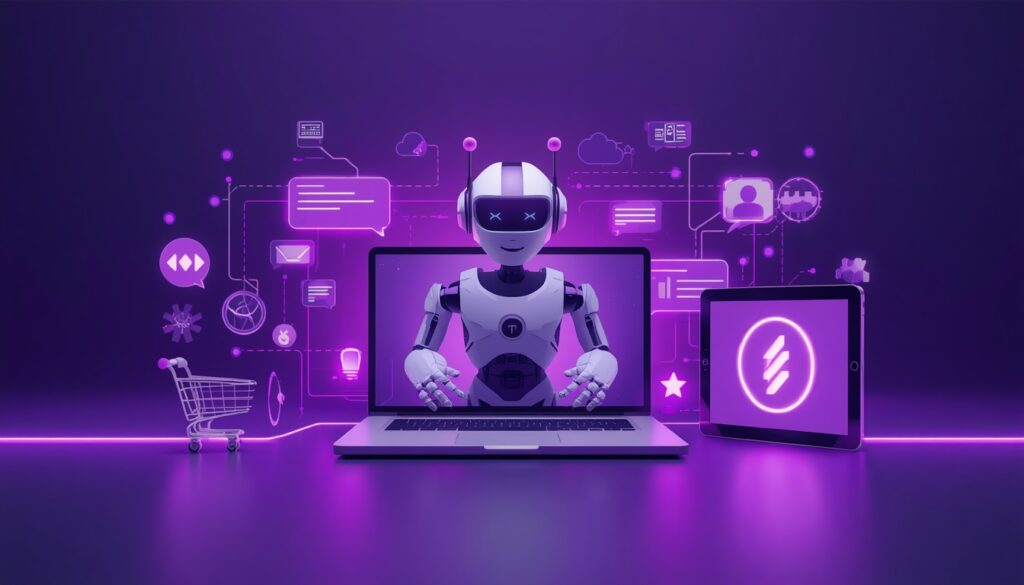
Marketing is moving from static campaigns toward more adaptive customer experiences.
AI agents are likely to become increasingly connected to CRM platforms, analytics systems, advertising platforms, content systems, and customer communication channels.
This could create marketing teams where humans and AI agents work together.
A marketer might define the strategy and business objective. One agent could analyze the audience, another could help develop content, another could monitor campaign performance, and another could identify customer opportunities.
Salesforce is already positioning agentic marketing around areas such as personalized journeys, campaign creation, analytics, and two-way customer interactions.
However, the future will not be about replacing marketers.
It will be about changing what marketers spend their time doing.
Instead of manually moving data between platforms or checking dashboards all day, marketers can focus more on customer understanding, creative strategy, positioning, experimentation, and business growth.
Marketers With AI Agents have an opportunity to build customer relationships that are more personalized, responsive, and consistent.
AI agents can help marketers understand customer behavior, qualify leads, personalize communication, automate workflows, analyze performance, and support retention.
But technology alone will not create lasting relationships.
Trust, useful content, relevant communication, strong brand values, and human judgment will remain essential.
The most successful businesses will likely be the ones that combine these strengths: human creativity and empathy with AI-driven speed and intelligence.
AI agents should not make marketing feel less human.
They should give marketers more time and capability to make it more human.